2027 Hyundai Tucson FWD Specs: The Practical Side of Ride and Handling – When sizing up the 2027 Hyundai Tucson FWD specs, two practical questions often come to the fore: How well does the front-wheel-drive setup serve daily driving needs, and what compromises might it bring compared to all-wheel-drive alternatives? These questions matter because the Tucson’s specs directly influence ownership suitability, from fuel economy to cargo space and power delivery. But with official 2027 details still under wraps, the best approach is to lean on verified data from the current generation while clearly marking what remains unconfirmed for the upcoming model year.
Powertrain and Performance: What the 2027 Tucson FWD Might Offer
The heart of any Tucson spec discussion is its powertrain. For the 2027 Hyundai Tucson FWD, no official engine output or torque figures have been released yet. However, the current generation Tucson FWD typically pairs a 2.5-liter inline-4 engine producing around 187 horsepower and 178 lb-ft of torque. This setup balances everyday drivability with reasonable fuel efficiency, especially in front-wheel-drive form, which generally weighs less and offers better mileage than AWD variants.
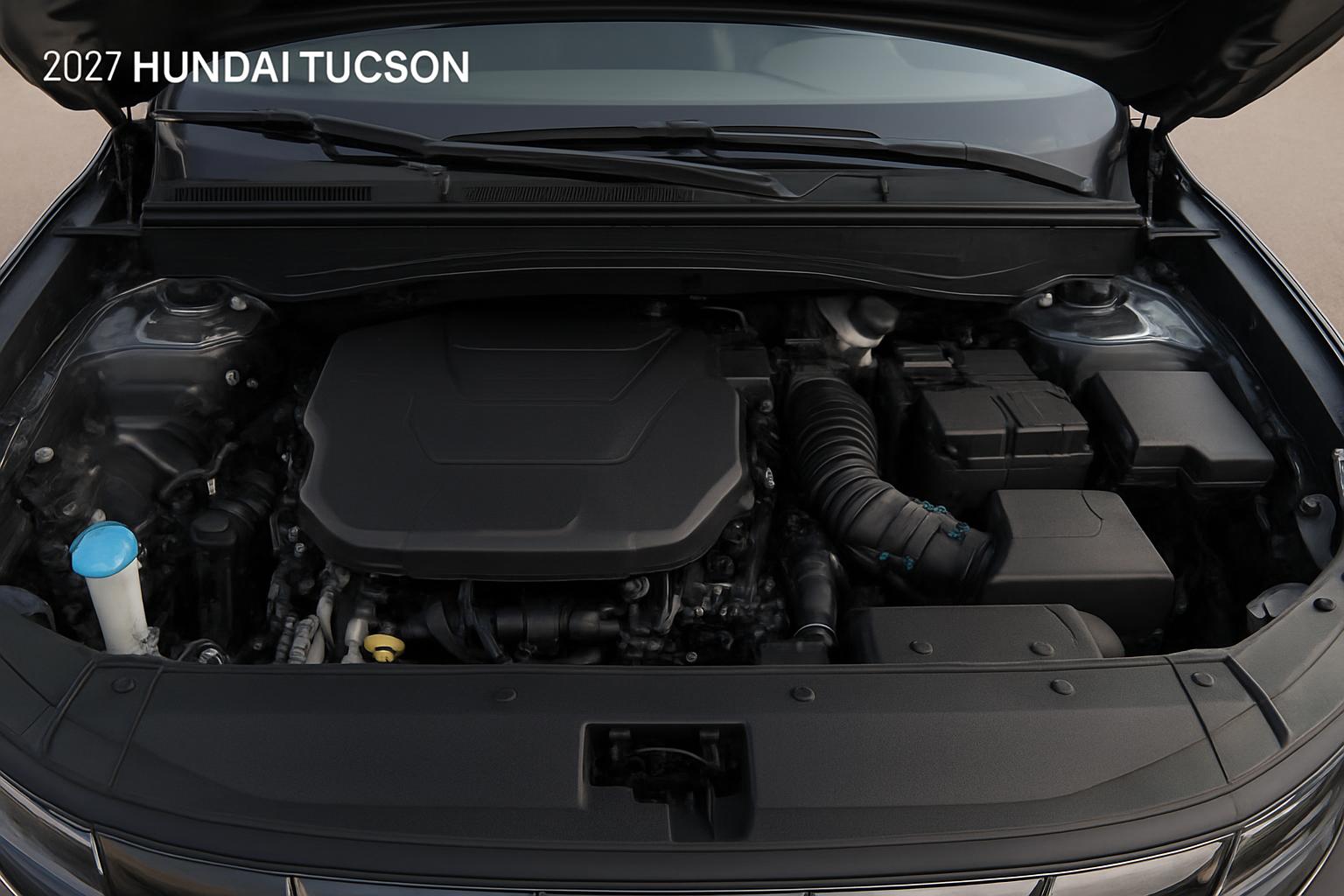
Why does this matter? The engine’s horsepower and torque determine acceleration, highway merging capability, and how the vehicle handles inclines or heavier loads. For buyers prioritizing city and highway commuting over rugged terrain or towing, a FWD Tucson with a modest but efficient engine often suffices. Yet, without 2027-specific confirmation, it’s prudent to verify if Hyundai maintains this powertrain or introduces revisions that could shift performance or economy.
Fuel economy ratings for the 2027 Tucson FWD remain unconfirmed. The previous generation’s FWD models earned EPA estimates in the mid- to high-20s mpg combined, a figure that appeals to efficiency-minded buyers. Any changes in engine tuning, weight, or aerodynamics for 2027 could impact these numbers, so prospective owners should check official EPA ratings once available.
Dimensions and Weight: How Size Influences Handling and Practicality
Exact 2027 Tucson FWD dimensions are not yet published. The current Tucson measures roughly 182.3 inches in length with a wheelbase near 108.5 inches. These dimensions strike a balance between interior space and maneuverability, making it suitable for urban driving and parking while providing enough cabin room for passengers.
Weight affects both fuel economy and handling. The FWD Tucson typically weighs less than its AWD counterpart, which can translate into slightly better gas mileage and more nimble steering feel. However, without 2027 figures, it’s unclear if Hyundai has adjusted the chassis or materials to alter weight. Buyers should watch for official curb weight announcements to understand potential impacts on performance and efficiency.
Cargo Capacity and Interior Space: Practicality in Everyday Use
For many Tucson shoppers, cargo volume is a key spec. The current generation FWD Tucson offers about 38.7 cubic feet of cargo space behind the rear seats and expands to roughly 74.8 cubic feet with seats folded. These numbers make it competitive in the compact SUV segment, allowing for groceries, gear, or luggage with relative ease.
Whether the 2027 model maintains or improves on this capacity is unknown. Changes in interior packaging, seat design, or mechanical components could influence usable space. Buyers should verify cargo specs once Hyundai releases them, especially if hauling capacity is a priority.
Braking, Suspension, and Steering: Supporting Specs That Affect Ownership Experience
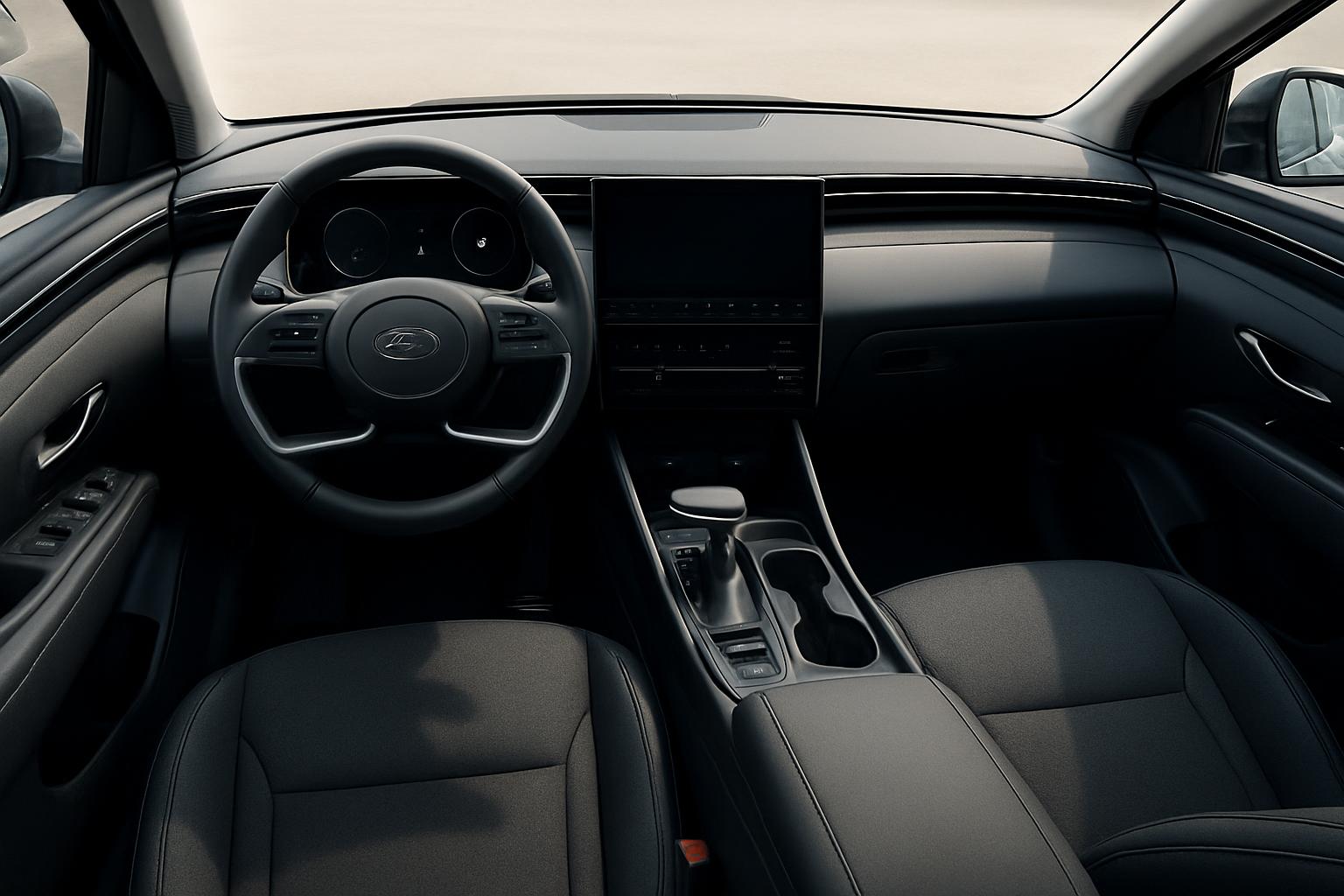
While powertrain specs grab headlines, supporting systems like brakes, suspension, and steering shape the Tucson’s day-to-day feel and safety. The current Tucson FWD typically features disc brakes all around, MacPherson strut front suspension, and a multi-link rear setup, tuned for a comfortable ride and predictable handling.
For 2027, no confirmed updates to these systems are available. However, any changes here could influence ride quality, cornering stability, and braking distances. Buyers interested in these specs should look for detailed technical sheets or test drives once the new model arrives.
What Remains Unconfirmed and How Buyers Should Proceed
The 2027 Hyundai Tucson FWD specs remain largely unconfirmed at this stage. Key figures like horsepower, torque, fuel economy, curb weight, and cargo volume have not been officially announced. This lack of data means buyers must rely on the current generation’s specs as a baseline while preparing to verify updates through Hyundai’s official channels or trusted automotive reviews once the new model is available.
Given the Tucson’s role as a practical compact SUV, prospective owners should focus on how the FWD configuration aligns with their driving needs. For those prioritizing fuel efficiency and urban maneuverability, the FWD layout and its associated specs often provide a sensible balance. Conversely, buyers needing enhanced traction or towing should consider waiting for confirmed AWD specs or alternative models.
Balancing Tradeoffs: Ownership Suitability Based on 2027 Tucson FWD Specs
Ultimately, the 2027 Hyundai Tucson FWD specs will define its ownership appeal through a series of tradeoffs. A front-wheel-drive setup typically offers better fuel economy and lower initial cost but sacrifices some traction and off-road capability compared to AWD. Engine power and torque figures will dictate how responsive the vehicle feels in everyday scenarios, while cargo capacity and interior dimensions affect practicality.
Until official specs emerge, the best strategy is to weigh these factors against personal priorities. If the 2027 Tucson follows its predecessor’s blueprint, it should remain a solid choice for buyers seeking a compact SUV with straightforward, efficient front-wheel drive. Confirming exact numbers will be essential to finalize that assessment.
In summary, the 2027 Hyundai Tucson FWD specs currently rest on a foundation of prior-generation knowledge and cautious anticipation. Buyers should monitor Hyundai’s announcements closely and prepare to compare verified specs against their own driving and cargo needs to make an informed decision.
Fuel Economy Nuances and Real-World Efficiency Considerations
Fuel economy figures often headline Tucson specs, but understanding their real-world implications requires digging deeper. The front-wheel-drive layout generally trims weight and mechanical drag compared to all-wheel drive, which can translate into better EPA ratings and lower fuel costs over time. However, actual mileage depends on factors beyond the drivetrain, including engine tuning, transmission type, and vehicle weight.
For the 2027 Tucson FWD, the absence of official EPA numbers leaves a gap, but the previous generation’s mid-20s combined mpg offers a useful reference point. Buyers should consider that urban stop-and-go traffic, climate conditions, and driving style can cause noticeable deviations from these estimates. Additionally, any changes Hyundai makes to aerodynamics or powertrain calibration for 2027 could shift fuel efficiency in either direction.
Potential owners should also weigh the tradeoff between fuel economy and performance. A more fuel-efficient engine tune might sacrifice some throttle responsiveness or acceleration, which could affect highway merging or overtaking. Conversely, a more powerful setup might consume more fuel but deliver a more confident driving experience. Understanding these nuances helps buyers align Tucson specs with their daily driving demands.
Transmission Choices and Their Impact on Driving Dynamics
The transmission plays a pivotal role in how the Tucson FWD delivers power and efficiency. While 2027 specifics are not yet disclosed, the current Tucson FWD typically employs an 8-speed automatic transmission known for smooth shifts and reasonable responsiveness. This gearbox balances fuel economy with drivability, contributing to the vehicle’s overall ownership suitability.
Transmission tuning affects not just fuel consumption but also how the vehicle feels in traffic and on highways. For example, longer gear ratios can improve highway fuel economy but might dull acceleration, while shorter ratios enhance responsiveness at the cost of efficiency. Buyers should watch for any updates or alternative transmission options in the 2027 model that might shift this balance.
Moreover, the interaction between the transmission and the front-wheel-drive system influences traction and handling, especially in wet or slippery conditions. While FWD setups inherently have limitations compared to AWD in these scenarios, transmission calibration can mitigate some traction issues through features like torque management or adaptive shift logic. Understanding these technical aspects can help buyers anticipate the Tucson’s real-world behavior beyond headline specs.
For confirmed updates, consult Official Hyundai website and EPA fuel economy information. These resources do not confirm unannounced model-year details.
Additional Vehicle Images
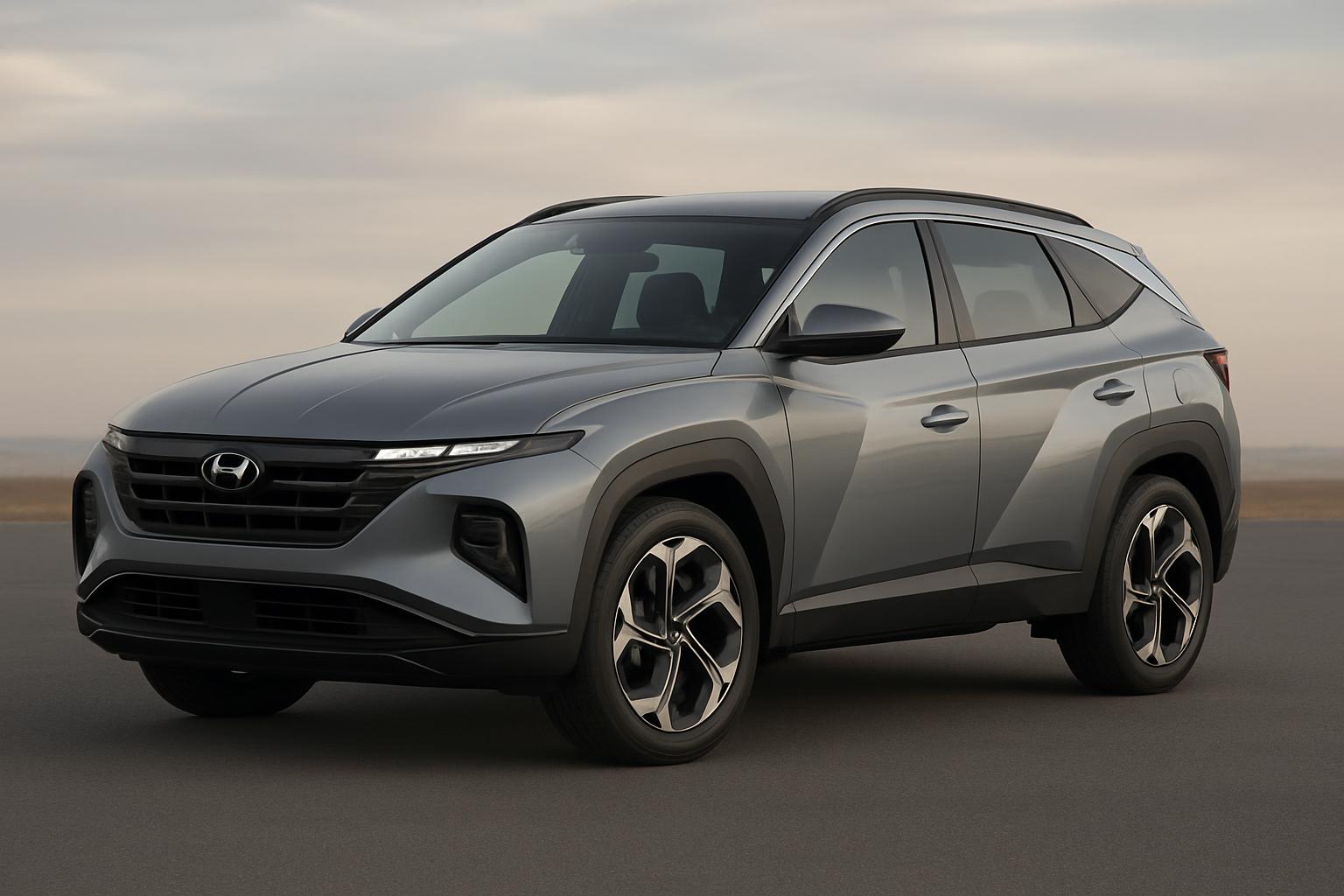
Hyundai Tucson — Compare With Previous Model Year
| EPA specification | 2027 | 2026 |
|---|---|---|
| Configurations | Not Confirmed | Tucson AWD / Tucson FWD / Tucson Hybrid (EPA #49498) / Tucson Hybrid (EPA #51096) / Tucson Plug-in Hybrid |
| Powertrain | Not Confirmed | Gasoline / Gasoline / Hybrid / Hybrid / PHEV |
| Engine displacement (L) | Not Confirmed | 2.5 / 2.5 / 1.6 / 1.6 / 1.6 |
| Cylinders | Not Confirmed | 4 |
| Transmission | Not Confirmed | Automatic (S8) / Automatic (S8) / Automatic (AM-S6) / Automatic (AM-S6) / Automatic (AM-S6) |
| Drivetrain | Not Confirmed | All-Wheel Drive / Front-Wheel Drive / All-Wheel Drive / Front-Wheel Drive / All-Wheel Drive |
| Fuel type | Not Confirmed | Regular / Regular / Regular / Regular / Regular Gas and Electricity |
| Primary fuel | Not Confirmed | Regular Gasoline |
| Alternative-fuel type | Not Confirmed | Not Confirmed / Not Confirmed / Hybrid / Hybrid / Plug-in Hybrid |
| City MPG | Not Confirmed | 24 / 25 / 36 / 40 / 35 |
| Highway MPG | Not Confirmed | 30 / 33 / 37 / 35 / 35 |
| Combined MPG | Not Confirmed | 26 / 28 / 36 / 38 / 35 |
| City MPGe | Not Confirmed | Not Confirmed / Not Confirmed / Not Confirmed / Not Confirmed / 42.0 |
| Highway MPGe | Not Confirmed | Not Confirmed / Not Confirmed / Not Confirmed / Not Confirmed / 46.0 |
| Combined MPGe | Not Confirmed | Not Confirmed / Not Confirmed / Not Confirmed / Not Confirmed / 44.0 |
| EPA range (miles) | Not Confirmed | Not Confirmed / Not Confirmed / Not Confirmed / Not Confirmed / 420 |
| Annual fuel cost (USD) | Not Confirmed | 2300 / 2150 / 1650 / 1600 / 1700 |
| CO2 emissions (g/mile) | Not Confirmed | 337.0 / 322.0 / 243.0 / 235.0 / 103.0 |
Source: U.S. EPA vehicle data. Values separated by / follow the Configurations order for that model year. EPA IDs distinguish configurations sharing the same model label. Not Confirmed means no verified EPA value is available for that configuration and field.
Frequently Asked Questions
2027 Hyundai Tucson FWD Specs: The Practical Side of Ride and Handling - When sizing up the 2027 Hyundai Tucson FWD specs, two practical questions often come to the fore: How well does the front-wheel-drive setup serve daily driving needs, and what compromises might it bring compared to…
Powertrain and Performance: What the 2027 Tucson FWD Might Offer The heart of any Tucson spec discussion is its powertrain. For the 2027 Hyundai Tucson FWD, no official engine output or torque figures have been released yet. However, the current generation Tucson FWD typically pairs a 2.5-liter inline-4…
Why does this matter? The engine’s horsepower and torque determine acceleration, highway merging capability, and how the vehicle handles inclines or heavier loads. For buyers prioritizing city and highway commuting over rugged terrain or towing, a FWD Tucson with a modest but efficient engine often suffices. Yet, without…
Fuel economy ratings for the 2027 Tucson FWD remain unconfirmed. The previous generation’s FWD models earned EPA estimates in the mid- to high-20s mpg combined, a figure that appeals to efficiency-minded buyers. Any changes in engine tuning, weight, or aerodynamics for 2027 could impact these numbers, so prospective…
Dimensions and Weight: How Size Influences Handling and Practicality Exact 2027 Tucson FWD dimensions are not yet published. The current Tucson measures roughly 182.3 inches in length with a wheelbase near 108.5 inches. These dimensions strike a balance between interior space and maneuverability, making it suitable for urban…